Showing posts with label travel. Show all posts

Saturday, 10 January 2026

Budapest by Day

Once I realised where the hotel was relative to Buda Castle, I had an idea. (People who know me are now playing the beginning of Beethoven's fifth in their head) 

I start work at 8.30. If I got up early enough, I could do a quick tour of the outside of the castle and come back down in time to start work. 

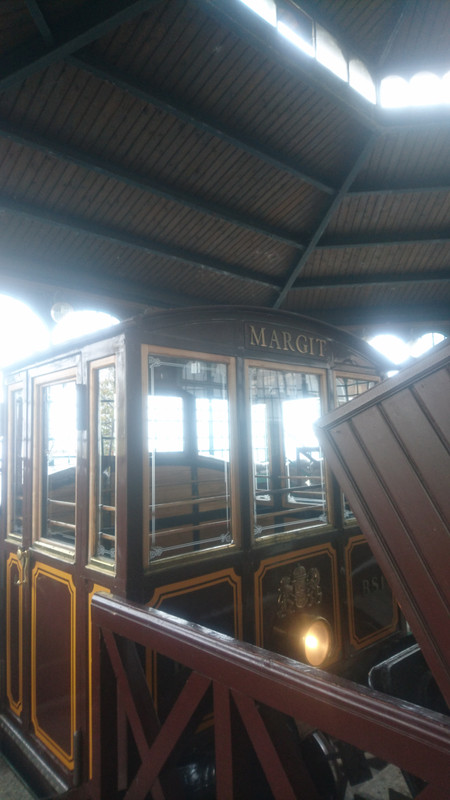
It also gave me the opportunity to travel in a funicular carriage - an unexpected delight! A brown funicular railway carriage, her name is Margit. 
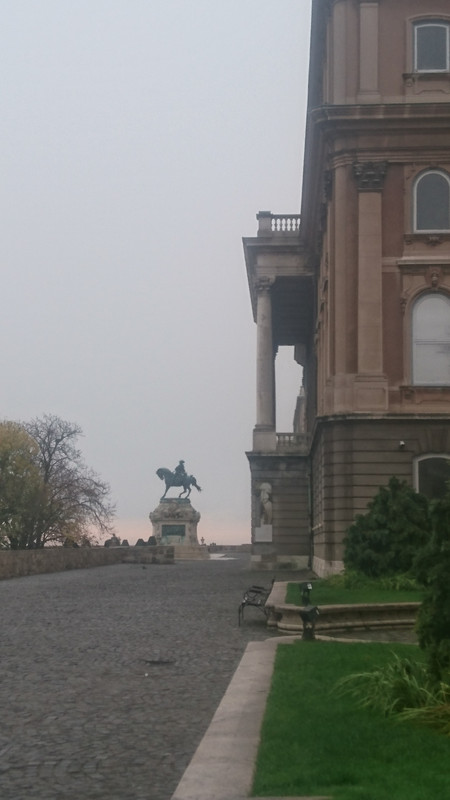
I got the first funicular up to the castle in the morning, which meant I saw sunrise over Buda Castle. Pink dawn rising behind statue of a rider on a horse, next to a Rococco building. 
It was a proper "all-timer" of a memory. 

One thing that got me is I knew who the statue was without looking. Now I'm sure it's because the statue is the same as - or really similar to - the statue in the Heldenplatz, but I didn't need to see the plaque to know that's Prinz Eugen. 

(Having looked this up while writing this post, I've discovered that the first funicular now leaves at 8. I'd like to believe I would have gone up the stairs if there had been no funicular. I would have missed out on something spectacular if I hadn't.) 

I did an hour wander around the outside of the castle. Map of Buda Castle Map of the castle so you can sort of place the next few photos. 
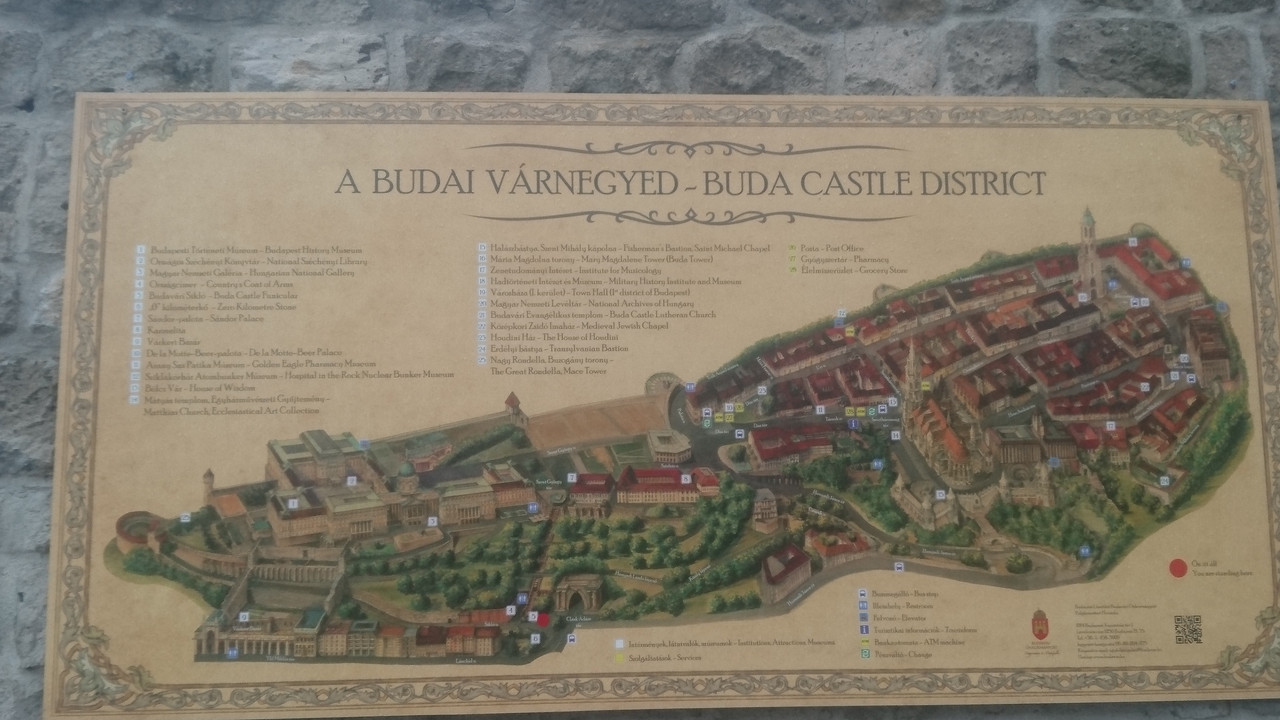
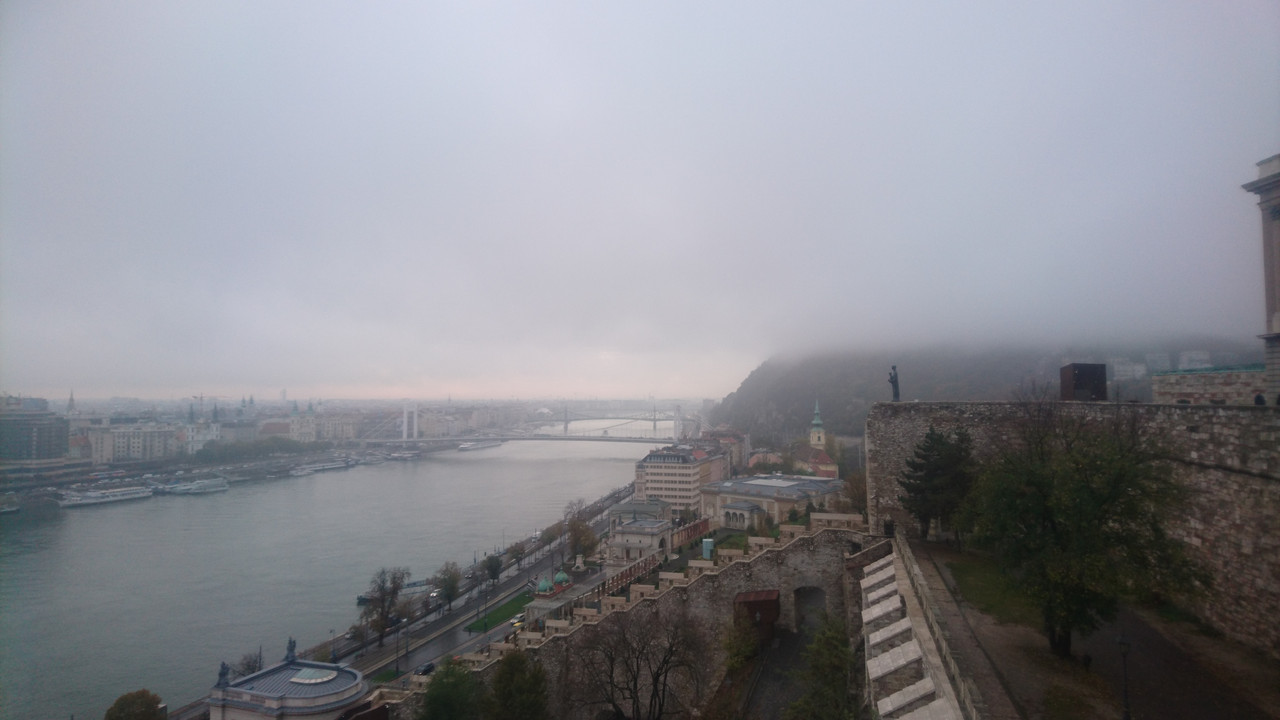
And yes, it was quite foggy. 

The next three photos are from Buda castle facing Pest. 
They move from left to right.
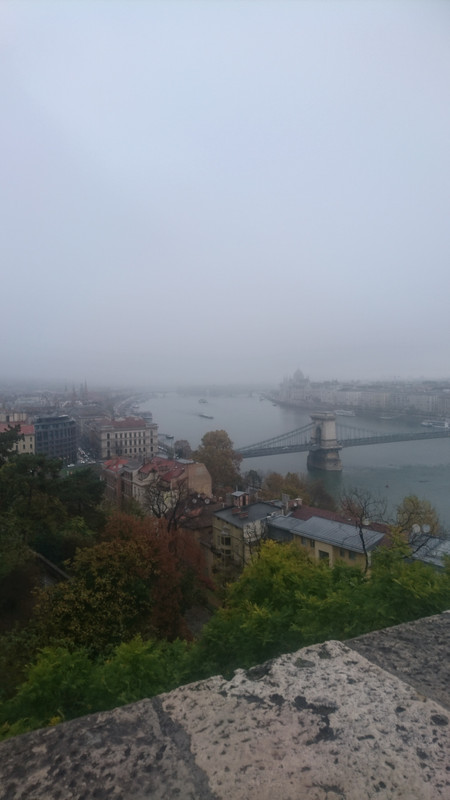
  Foggy view of the Kettenbrücke looking down from Buda Castle along the Danube. 

View directly across the Kettenbrücke from the castle. You can also see several of the big fancy hotels. Photo from Buda Castle, the Kettenbrücke is on the left.  The other big buildings are the big fancy hotels.
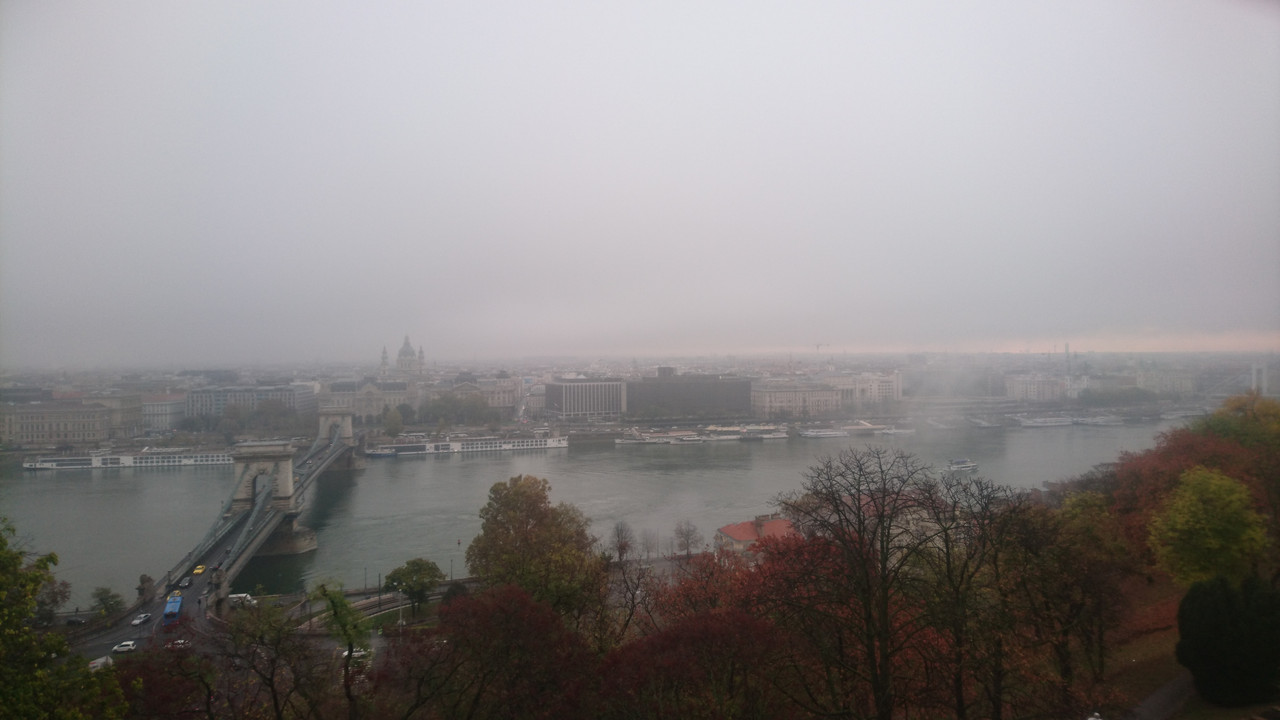
Very foggy photo to the right of Buda Castle, looking along the Danube.  The statue of Mary can be seen on the right of the photo. 
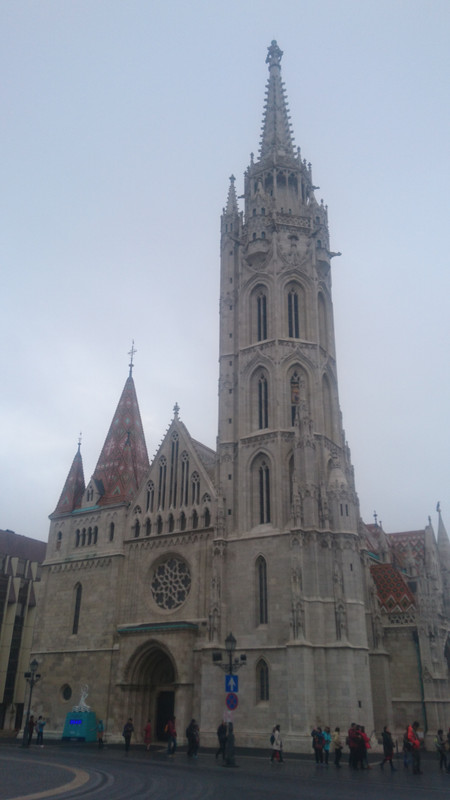
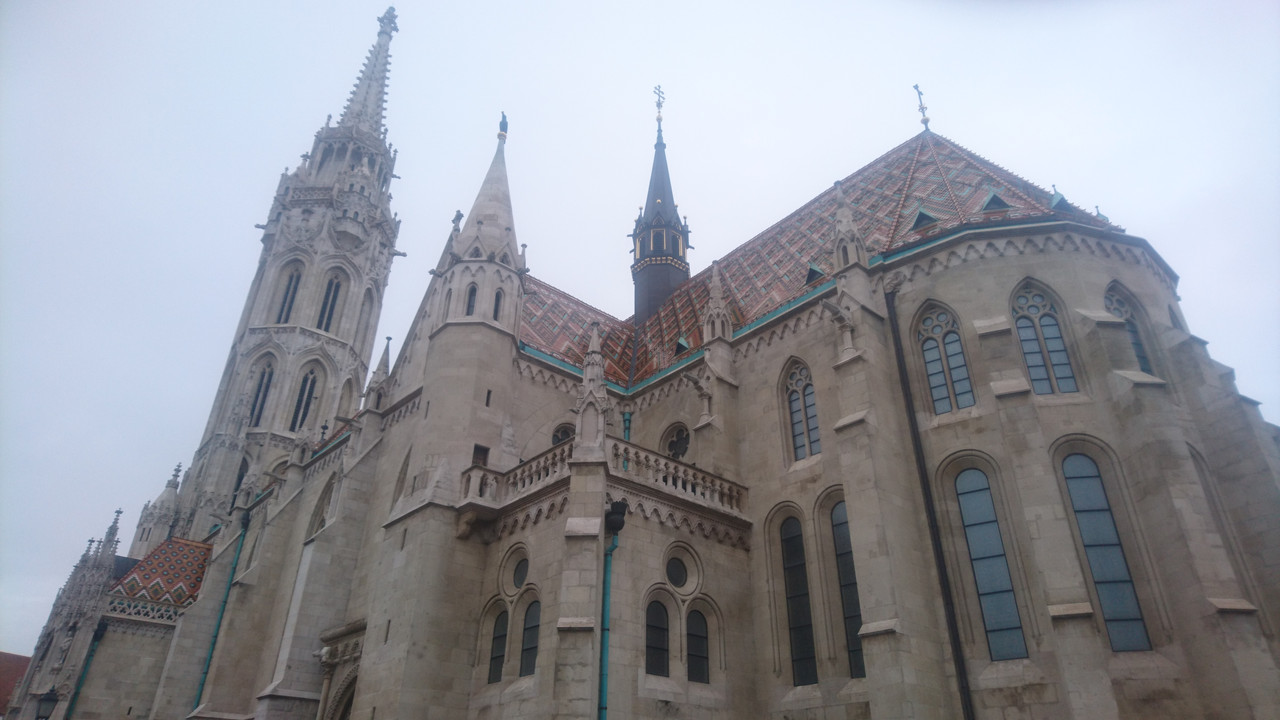
Two photos of the Matthias Church. Main tower of the Matthias Church.  Wikipedia informs me it is late Gothic in style. The side of the Mattias Church, you can see the tower on the left of the picture.  At the front is the rest of the building.  The roof, decorated with red, blue and yellow tiles, can be clearly seen. 

I acknowledge the church overall is impressive, but I do love that style of roof excessively. I blame the Stefansdom. 

And finally the Fisherman's Bastion. Because I cannot do apostrophes in at least one of the places I use alt-text, I will have to call this the Bastion of the Fishermen.  It is an off-white neo-Romanesque building, with one large tower attached to a second thinner tower.  There are stairs leading up to the building.  A small group of tourists is standing in front of it. 
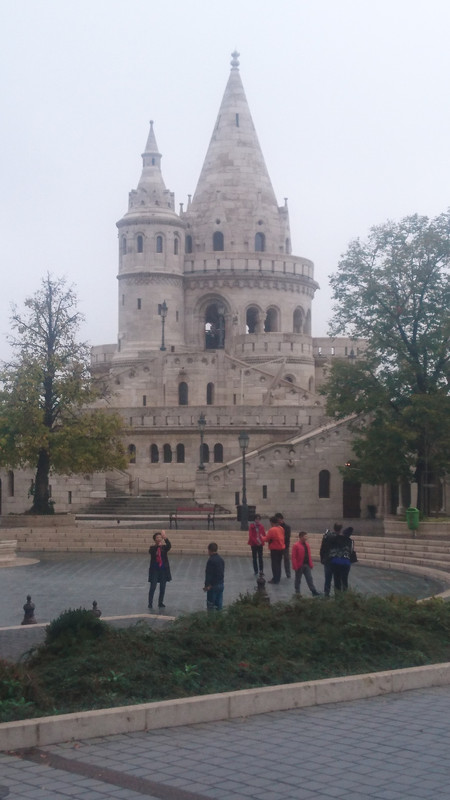
It's such a delightfully different structure to find in the middle of a castle complex. 

As you can see in that last picture, people were starting to appear at the Castle District which was a good sign that I needed to get back down to the hotel to start work on time. Which I did.

Friday, 7 November 2025

Budapest at Night

Some pre-COVID years ago, I was lucky enough to travel to Budapest with work. 

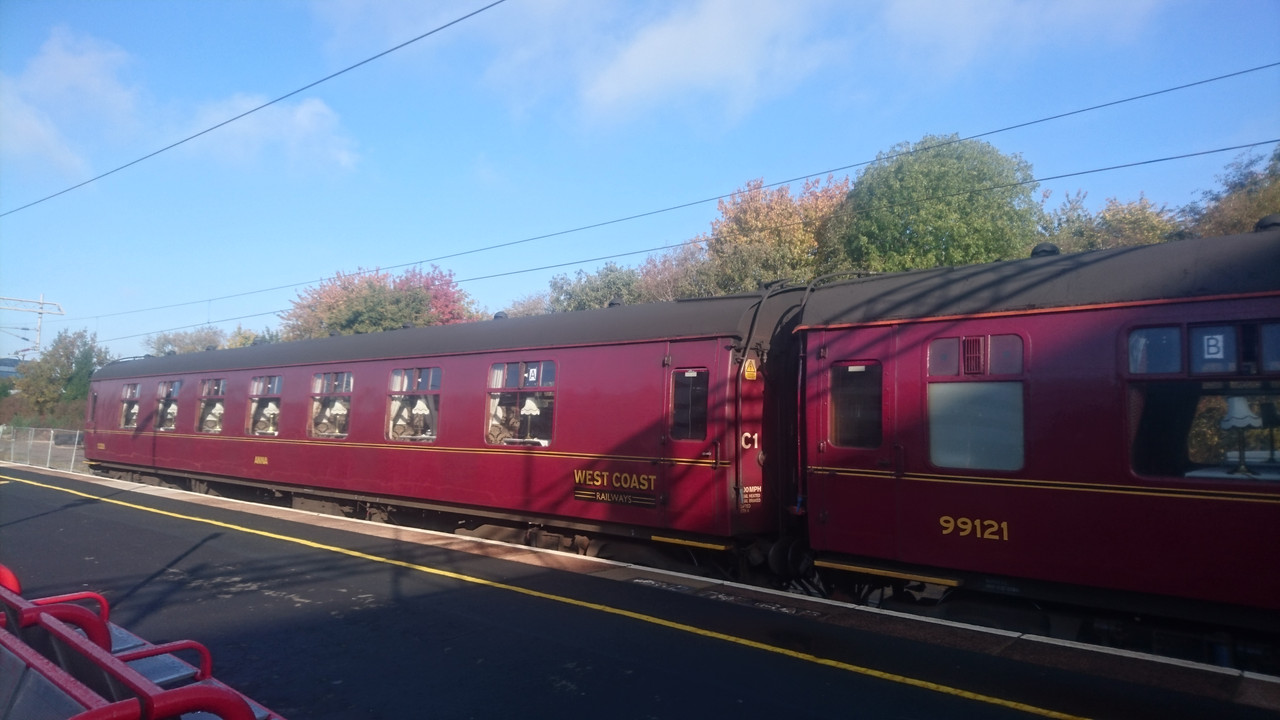
It started off well because there was a very pretty train on the other platform at Birmingham International.
  Two maroon red train carriages.  The train carriage in the back has West Coast Railways written on it in gold.  The front carriage has the number 99121 written on it in gold.  Through the windows you can see that each table has a table lamp on it.  That is a fancy train. 
Sorry, I'm a 3rd gen train weirdo. Like all airports, there's different flight paths into Budapest and we were lucky enough to be on the one that takes you along the Danube. Absolutely amazing. The people I was working with were kind enough to give us a very quick tour of central Budapest. Here are some highlights.
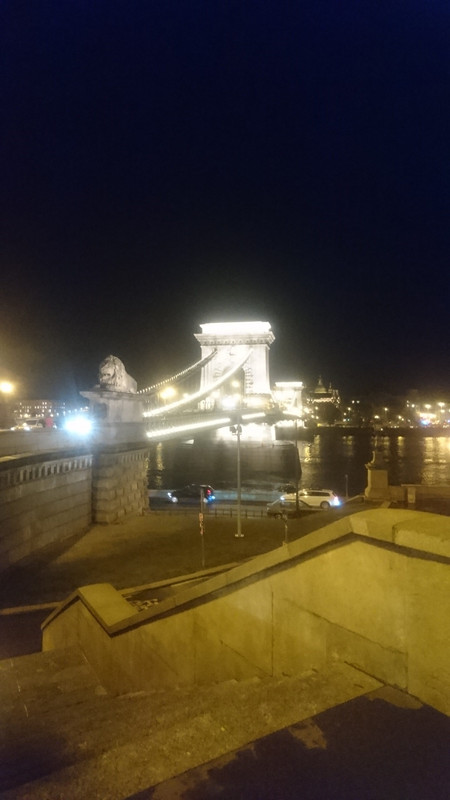
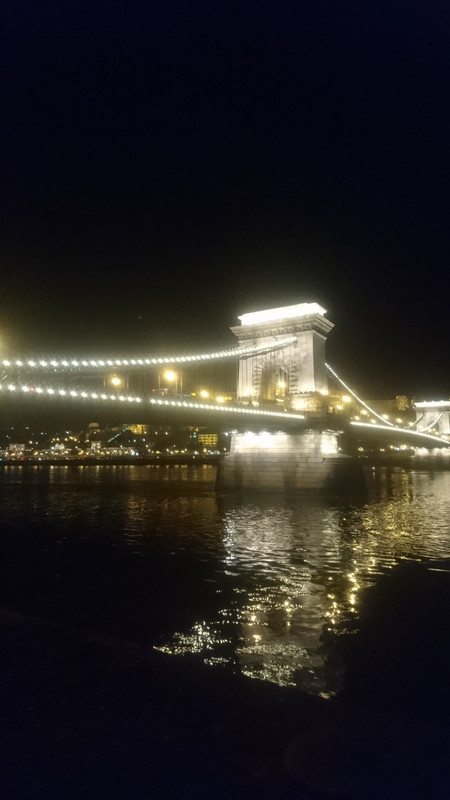
  The Chain Bridge against a night sky background.  The sky is black and the bridge is illuminated with lots of white lights placed on it. 
This is where I hit a small problem. If I am not thinking straight it's the Kettenbrücke, I am aware in English it's the Chain Bridge and I need to copy and paste from Wikipedia to get the accent right on Lánchíd. The names will be used interchangeably. 

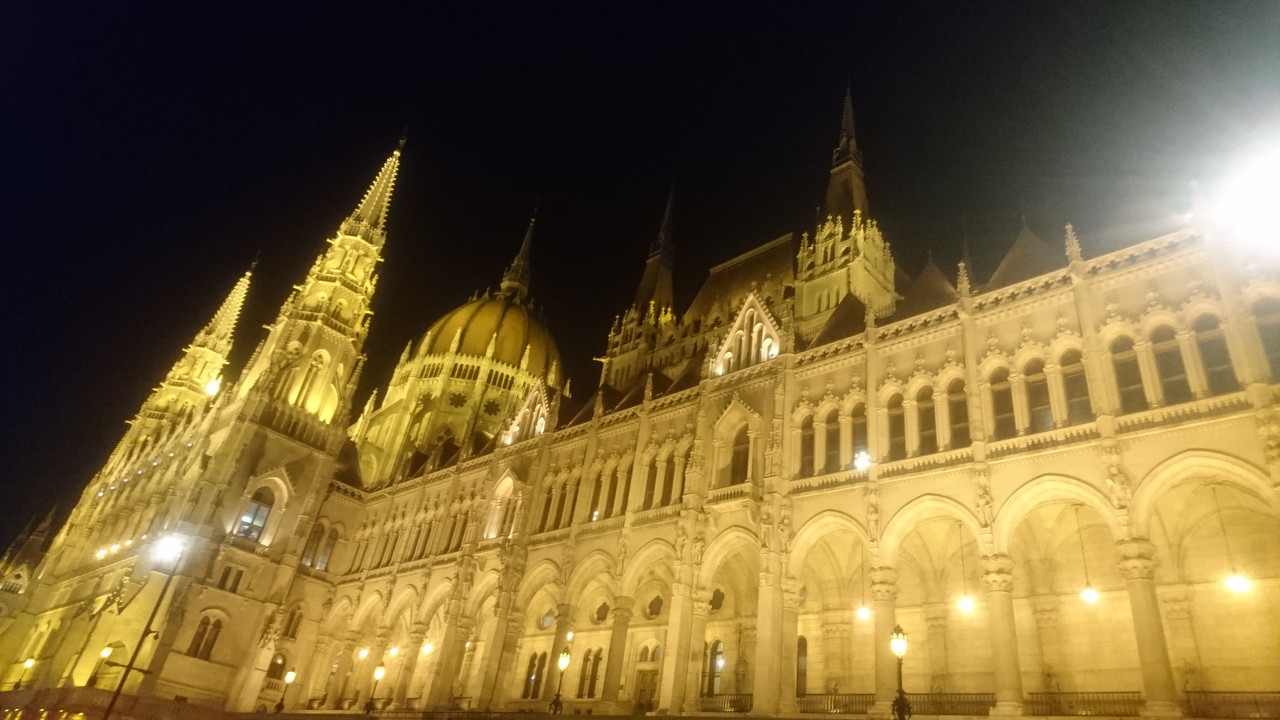
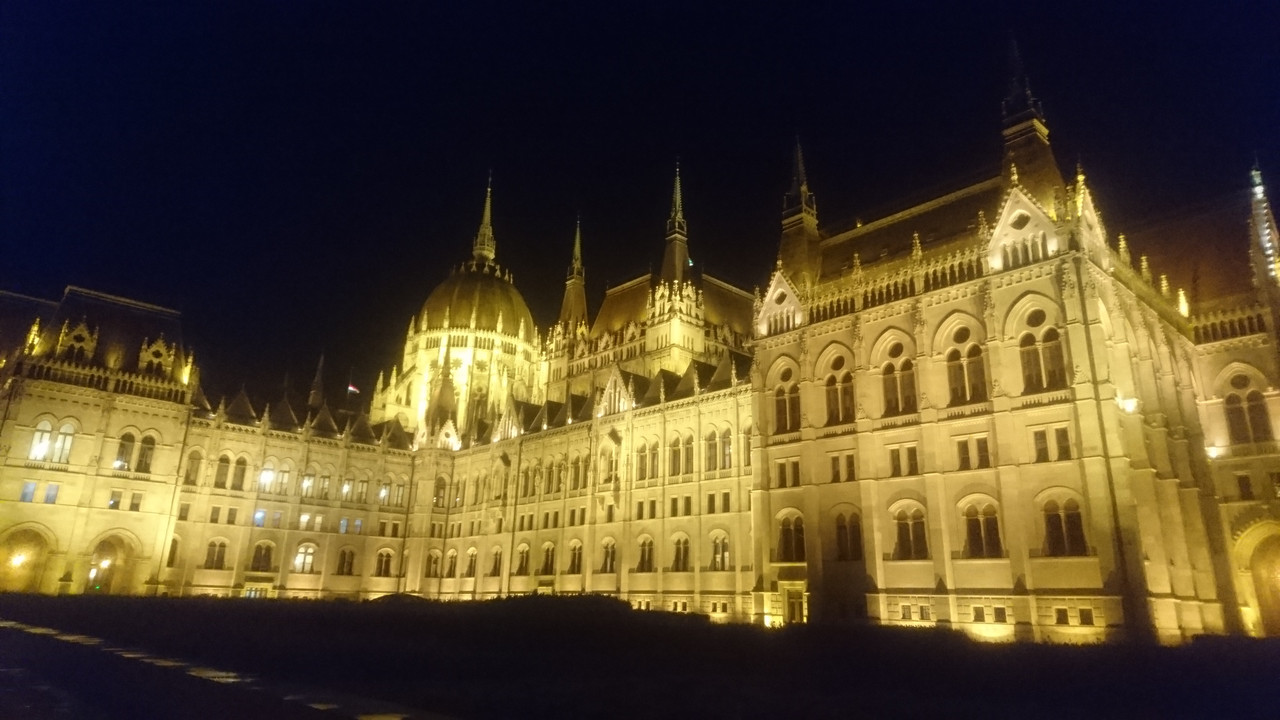
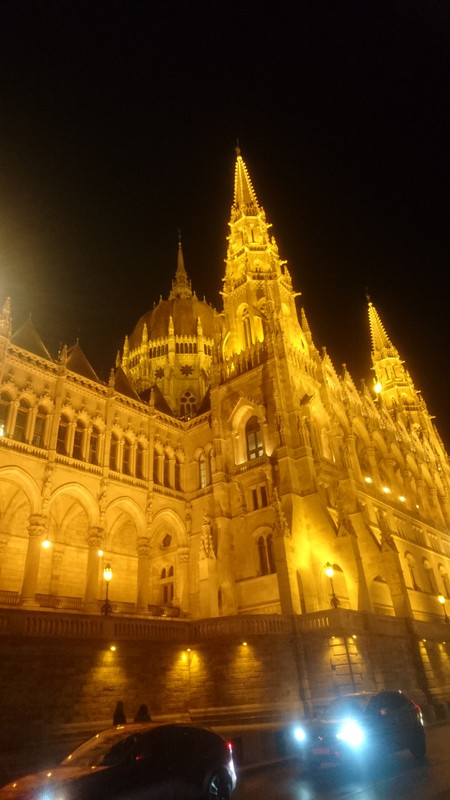
We walked past the Parliament building.
   Picture of the Hungarian parliament at night.  It is a neo-gothic building.  In this photo, there is one dome, just left of the centre, and three towers. 
Another view of the Parliament building, this time with the dome in the centre, and the corner of the neo-Gothic parliament. 
Yet another dome and tower of the parliament building. 

Hopefully the photos get across just how big the parliament is. 

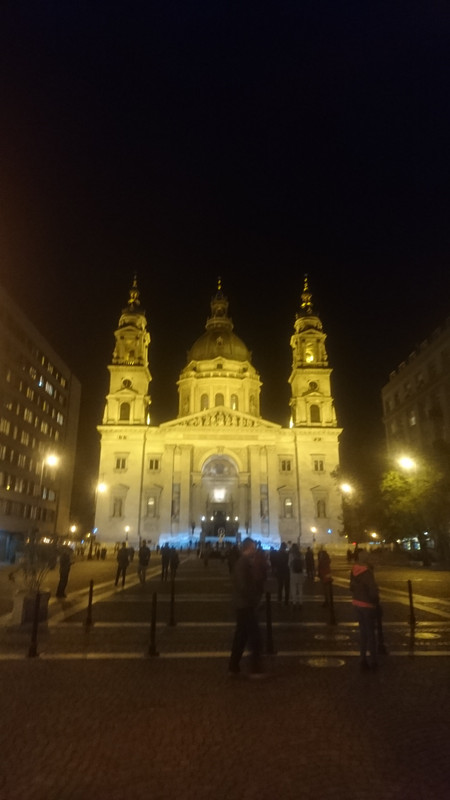
Then we walked through the park to St. Stephen's Basilica.
  Front of the basilica of St. Stephen.  It is a neo-classical basilica.  There are people walking in front of it. When we were there, there was an memorial to the 1956 Uprising - https://en.wikipedia.org/wiki/Hungarian_Revolution_of_1956 

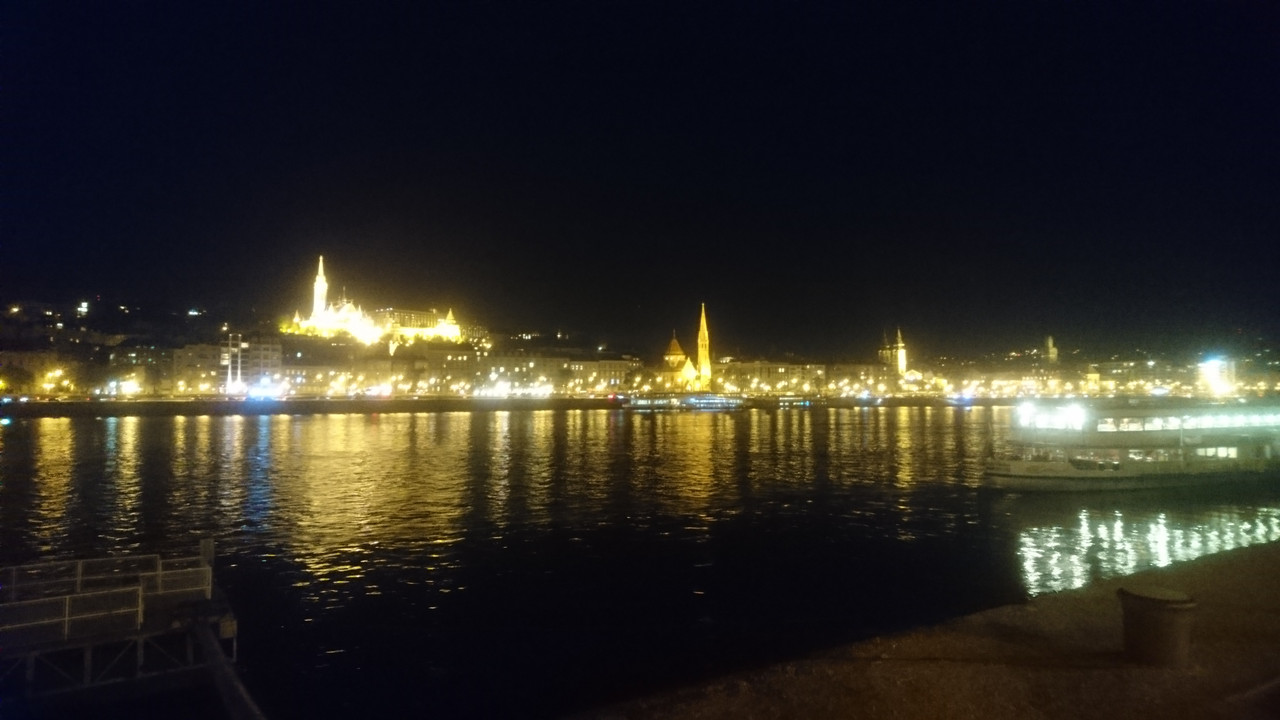
View of Budapest Castle from the other side of the river. Budapest castle at night.  It is illuminated, and stands above the rest of the riverside, which is also illuminated. 
We were taken to Pater Marcus - https://www.patermarcus.hu/ - which has delicious food. And drink. But especially the food. 
 
And then, back over the bridge to the hotel. Another shot of the Kettenbrücke, still lit up, from the other side.  The photo is facing Castle Hill.

Tuesday, 6 February 2024

Andalusia 2019 - Part 11 - Granada

The day after the Alhambra, on our last day in Andalusia we visited Granada (https://en.wikipedia.org/wiki/Granada). As you could see from the last photo in the last post, the Granada really does surround the Alhambra. 

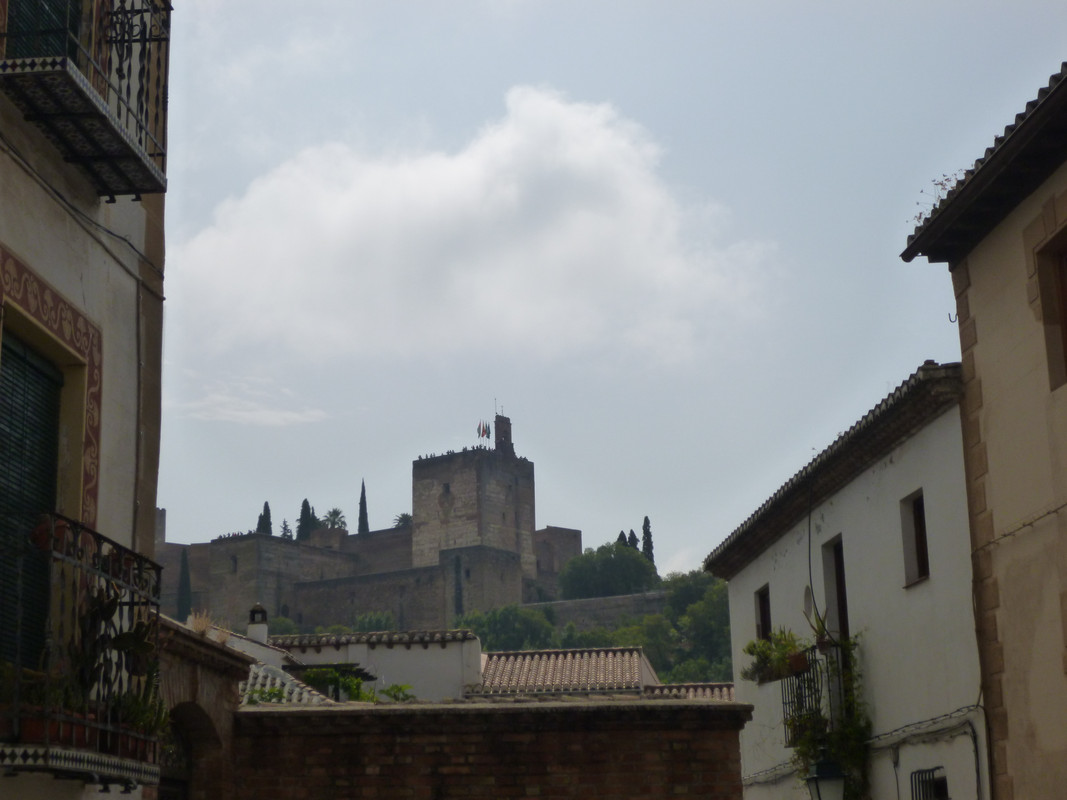
View of the Alhambra from Granada: View of the Alhambra from Granada 

Granada was the fourth city we visited and the fourth completely different vibe. 

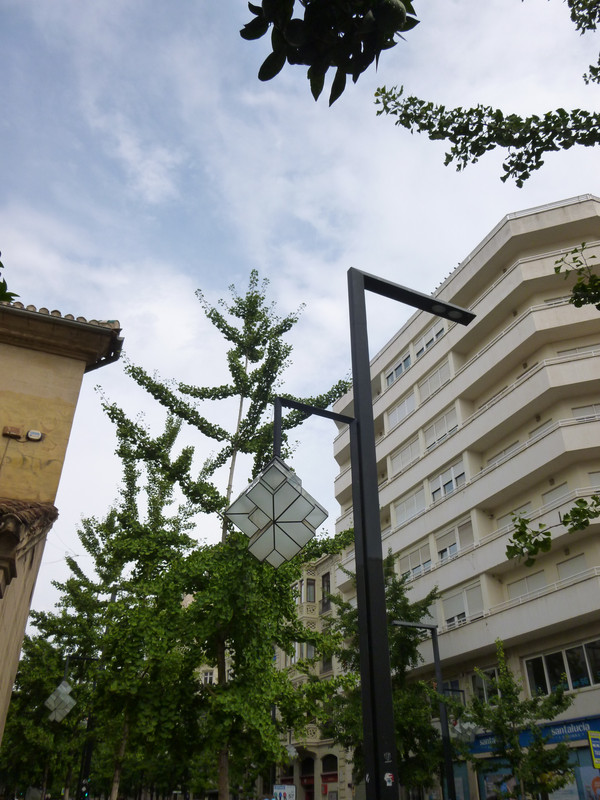
Granada had a much wider range of building styles, and some really cool lampposts: Modernist lamppost, the fitting around the bulb is a square broken down into smaller shapes.  It is both unusual looking and very cool. 

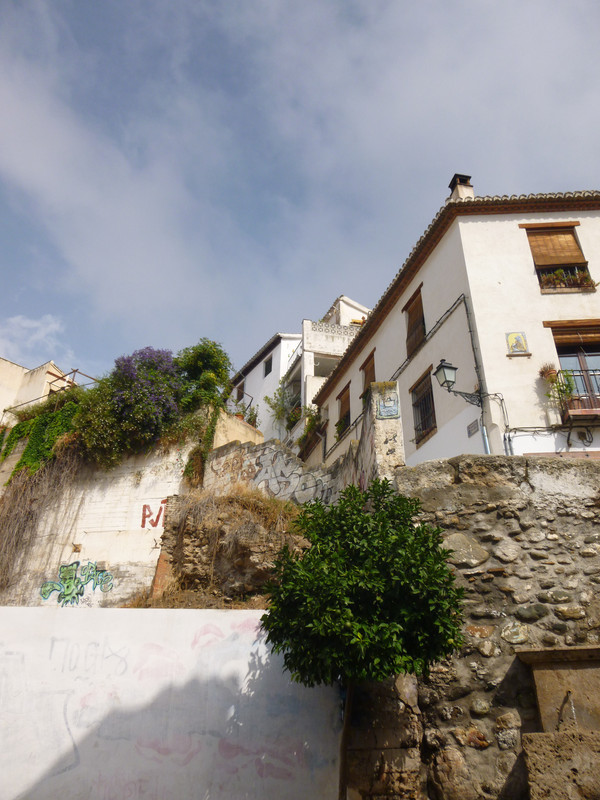
This is just an ordinary building, I liked the tree striving to survive: Corner of a pebble wall at the bottom of a hill of houses.  There is some graffiti on the white wall to the left, and a green tree growing out of the join between the white wall and the pebble wall. 

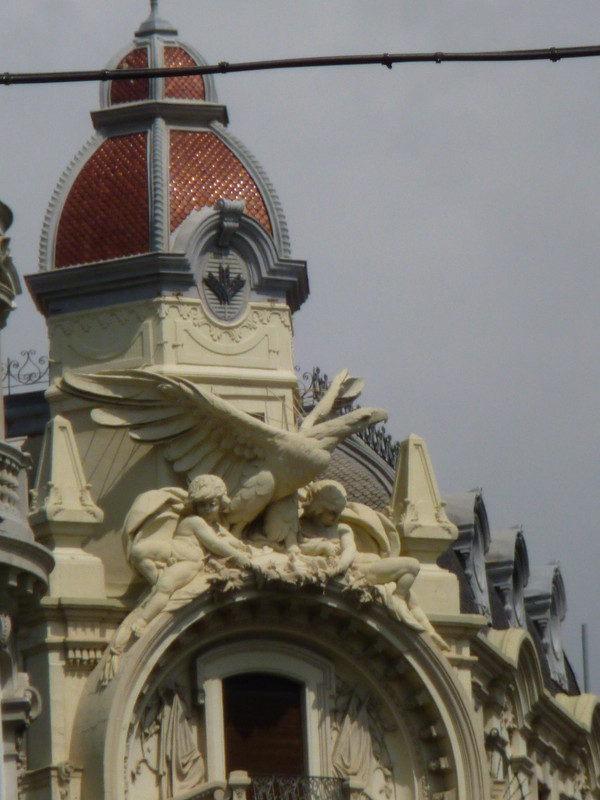
While I think the decoration at the top of this building is neat, it loses something without the rest of the building so have the building and then the close up shot: Yellow white multi-storey stone building, with the top window guarded by two angels and an eagle Close up of yellow white stone angels and the eagle 

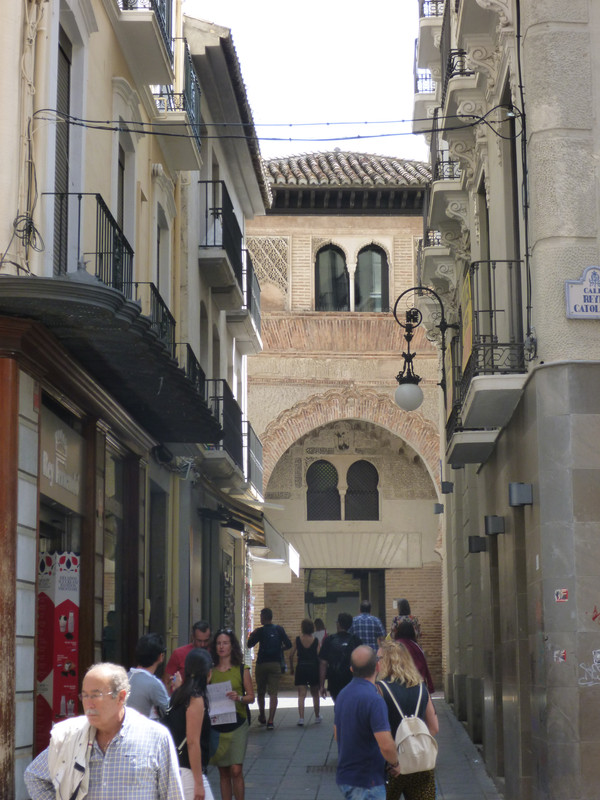
Mudejar arch at the end of a row of shops: Left and right are rows of shops.  In the front of the photo are people walking along the street.  At the back is an orange stone arch in mudejar style. 

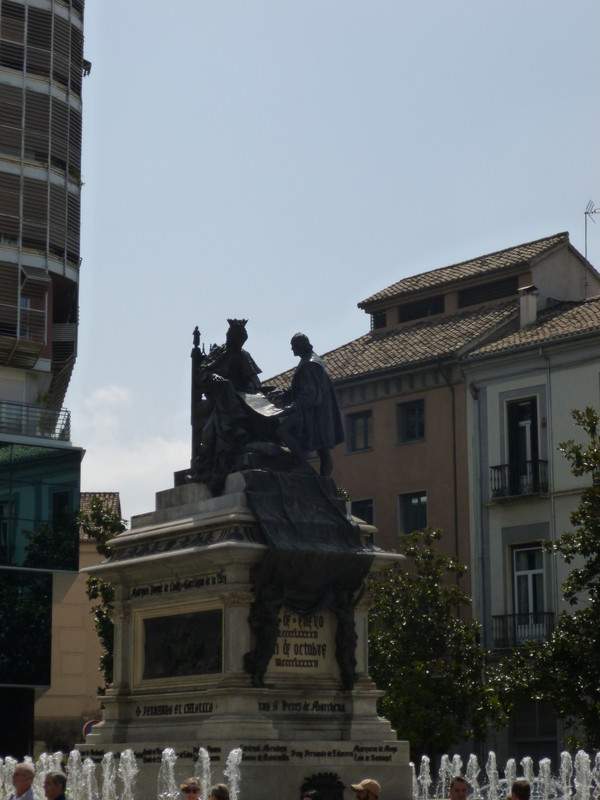
There was also a fascinating statue of Isabella the Catholic (unfortunately, I am foreign enough that I think of her as Isabella the Catholic. I am sure she actually has a regnal number and stuff). Statue of Christopher Colombus kneeling in front of Isabella the Catholic.  The plinth is an off white stone, the figures are in bronze.  Isabella dress cascades down the front of the plinth in ripples. 

I've never seen the ripple effect done by different colour material on such a large statue before. More information on the statue, and that it helped cause a riot, here - https://en.wikipedia.org/wiki/Monument_to_Isabella_the_Catholic_(Granada) 

Their Catholic majesties (don't look at me in that tone of voice) were pretty much the theme of the day as we spent most of our time in the Royal Chapel of Granada (https://en.wikipedia.org/wiki/Royal_Chapel_of_Granada) which contains the tombs of Isabella and Ferdinand, as well as Joanna of Castile and Philip the Handsome. And some very cool artwork. 

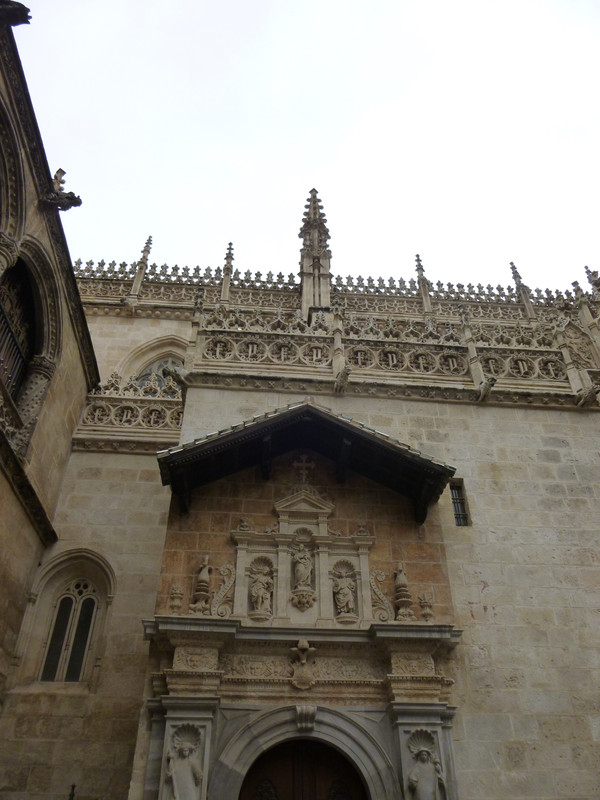
It is an understandably fancy building, in what I've been told is Isabelline style, a variant on late Gothic. Pictures of the building
  Carved triptych over a door.  The two saints are probably Saint John the Baptist and Saint John the Evangelist surrounding a Virgin and child.  The roof behind it features lots of twisty gothicness. 

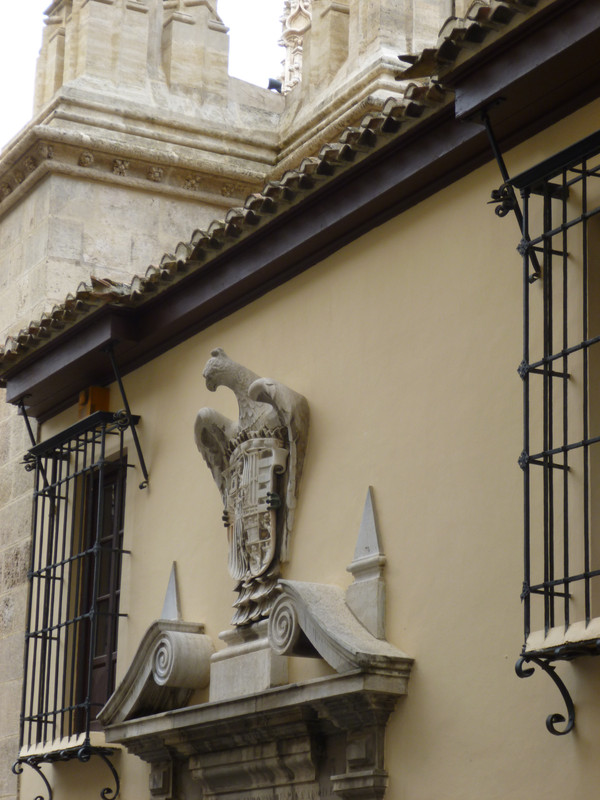
Because they get everywhere, I also suspect this of being a Hapsburg eagle holding the coat of arms of Isabella and Ferdinand.
  Decoration at the top of a door.  It is the side of an eagle holding a shield.  The design on the shield cannot quite be clearly seen. 

 We didn't get to see the San Juan de Dios Hospital (https://en.wikipedia.org/wiki/San_Juan_de_Dios_Hospital_(Granada)), which was our tour guide's favourite site in Granada (and may have been her favourite in all of Andalusia, Sharon being awesome that way), nor did we manage to have any tapas in the home of tapas (https://en.wikipedia.org/wiki/Tapas#Origin), but, all in all, it was a very successful trip, and I would recommend a visit to Andalusia to everyone.

Saturday, 27 January 2024

Andalusia 2019 - Part 10 - the Alhambra

The reason for our prompt departure from Antequera was that we had tickets to enter the Alhambra in the afternoon. 

Much like the Alcazar in Seville, it's the sort of place where you stick to your slot. 

It didn't feel as busy, but I think that's because it's built over a much bigger area. A much, much bigger area. There's a reason it's described as the Alhambra complex in lots of books. 

The Alhambra was the main reason we went on holiday to Spain. Mum had always wanted to go, and spurred on by her friend J's wise words of advice to "just go for it," I decided to take her. It was totally worth it. 

The route the guide took us in took us via the Palace of Charles V (https://en.wikipedia.org/wiki/Palace_of_Charles_V), which was very impressive, even if it didn't fit it with anything else.
  Circular building, open to the sky, with regular pillars.  Guide books describe it as renaissance-style. 

We wandered through the Alhambra at quite a pace, so yes, this is also on the "to be revisited" list. 

The Alhambra pays thanks to Washington Irving with a plaque. Stone plaque dedicated to Washington Irving.  It says "Washington Irving, escribo en estas habitaciones sus cuentos de la Alhambra en el ano de 1829."  Which translates to something like "Washington Irving wrote his stories of the Alhambra here in the year 1829. 
My terrible translation of this is "Washington Irving wrote his stories of the Alhambra here in the year 1829". 

We saw the Court of the Myrtles. 

Fuller information about this courtyard can be found here - https://en.wikipedia.org/wiki/Court_of_the_Myrtles
Very mudejar-style building.  There is a very plain tower in the background, the Comares tower.  There are arches which separate the walkway around the courtyard from the courtyard.  The stonework is intricately decorated.  There are tiles on the wall to about midway, and the rest is white painted.  There is a row of myrtle bushes in the foreground. 

The plain tower in the background is the Comares tower, and those bushes are the titular myrtles. 

We saw the Court of the Lions: 

Meet some lions A fountain basin surrounded by stylised lions.  The lions go all the way around, from this angle, you can see either of them.  In the background are arches and a lot of tourists. 

For further information on the Court of the Lions, please see here - https://en.wikipedia.org/wiki/Court_of_the_Lions 

The ceiling of the Sala de los Abencerrajes was possible the most intricate thing we saw all trip. Elaborately carved ceiling, a proper description is immediately below, written by someone who knows what they are talking about Borrowing the description from Wikipedia - "It is covered by an elaborate muqarnas vault ceiling, featuring a 16-sided lantern cupola in the shape of an eight-pointed star, possibly symbolizing the celestial heaven." 

My less technical take is "imagine beautiful inverted termite mounds". 

There is an even prettier ceiling in the Sala de Dos Hermanas, but I was particular taken by the interplay of the muqarnas ceilings and the stained glass in the Mirador. The muqarnas ceiling, which, as I said, looks like the most beautiful inverted termite mounds, takes up the top third of the picture.  They are white with blue highlights.  The centre of the next third is the stained glass, which is red, blue, green and yellow with the expected black lead lining.  The remainder of the photo is the white and blue detailed walls. 

The rest of my photos are outdoor photos.

View of the Partal palace 

  There are pine trees on both sides of the photo.  In the front is a patio that leads out onto bushes.  In the middle is a brown building.  The right hand side is one storey, the left hand, two storeys.  The front is mostly arches. 

View over to the Generalife: 

Details of this palace here - https://en.wikipedia.org/wiki/Generalife The foreground is dominated by gardens, and particularly a pine tree about a third of the way in from the left.  In the background is a white multi-storey building, which is the generalife. 
View back from the Generalife: View from the white building in the last picture over to the rest of the Alhambra complex.  The brown towers of the buildings are interspersed by trees.

We did get to walk over to the Generalife, and the view back helps show how big the whole Alhambra complex is. 

 The Alhambra really is surrounded by Grenada, as can be seen from this photo: View over part of Grenada.  The buildings are white walled and have orange tiled roofs. 

And that was where we went the next day.

Friday, 19 January 2024

Andalusia 2019 - Part 9 - Antequera

The day after Cadiz, we spent the morning in Antequera, which is a delightfully named town which became even more evocative when the tour guide explained it was called that because it was old when the Romans came. 

Local tourism board - https://antequera.co.uk/ 
Andalusian tourism board - https://www.andalucia.org/en/antequera 

We arrived near the Tourist Office and walked along to one of the squares which had some pretty fountains: Four water fountains, with the spouts coming out of faces.  Behind them are three storey white buildings. Bronze animal head that is also a fountain.  It is probably supposed to be a lion, but might be a bear.  The artist was trying, alright. 

From there, we walked up the hill to the arch of the giants, created for Philip II of Spain. Big stone arch.  On the left hand side is some sort of fir/pine tree.  The stone arch is as high as them.  It is about 7 metres high. 

Past the arch lies the Real Colegiata de Santa María la Mayor (https://www.andalucia.org/en/antequera-cultural-tourism-real-colegiata-de-santa-maria-la-mayor) Very pointy renaissance church.  There is a statue outside it and fir/pine trees on both sides. 

I also managed to get probably my best photo technically of the trip, capturing the flag fluttering in the breeze. White flag fluttering in the breeze against a blue sky with clouds.  There is a heraldic lion in black on the flag. From the top of the hill you could get a very nice view over the whole town. A view down some steps.  On the two sides are white painted houses with orange tiled roofs.  In the centre of the stairs is a fir tree.  In the distance is an orange stone church. Photo over the top of more orange tiled houses.  In the centre is another church, the top of bell tower is in a black stone 

There is a distinctly large number of churches per square foot. According to the tourism board it has the highest churches per person in Spain, and I could believe it. In a panorama shot that didn't quite come out, unfortunately, I managed to get 15 church spires in one shot.

Have a detail from one of them   Thick wooden church door with a niche above it.  In the niche is a statue of the Virgin Mary. 

I must admit my favourite bit of decoration was this graffiti. White wall, with a very basic drawing of a planet with something orbiting it.  Underneath is something that says something like Me siento astronauta pendida en los lunanes, which google translates as I feel like an astronaut hanging in the moon 
The next photo is from the top of the hill too. In the distance, you can see a hill that looks like a man's face coming out of the ground. The hill is called the Lover's Rock (https://en.wikipedia.org/wiki/Pe%C3%B1a_de_los_Enamorados) and has the exact star-crossed lover's throwing themselves off of it stories you'd imagine. A panorama of white walled houses with orange tiled roofs.  At the front are the black metal rails of a balcony.  In the distance is a mountain that looks like the face of a giant lying down. 

We had a very nice lunch in the town square, and then on to our next destination.

Saturday, 13 January 2024

Andalusia 2019 - Part 8 - Cadiz

Cadiz was a completely different vibe after Cordoba. 

Partly it was the temperature difference. Cordoba was the other side of 30oC, while Cadiz, being on the coast, was a good 5-10 degrees cooler. Seafront brick wall with old fashioned street lamps.  This runs along the left of the photo. The top right is the sky and the bottom right is the sea. 

In Cordoba we had a walk through little twisty streets and looked at flowery courtyards. In Cadiz, we stayed pretty much along the main streets which were much broader. 

On the other hand, they are not broad enough for tourist coaches when you're sent on diversions. Coach driver earned every penny that day. Multi-storey building.  White fronted, there are four windows with no frames on each floor, with a balcony on either end of the floor.  At the bottom are the tops of palm trees, and top there is a three-columned older style top with bronze winged victory on top.  Towards the bottom of the building is a black sign saying Diario de Cadiz with a red line underneath. 

The Diario de Cadiz is a local newspaper. I just liked the building.

This is a view of the Plaza del la Cathedral and the "new" cathedral.  Front of a sort of mudejar-baroque mixture cathedral.  The stone is in three bands, a white bottom, a more orange-y middle then a white top. 

Because my entire family are contrary, and it was on the the way to the Roman Amphitheatre, we looked in the old Cathedral instead. It very much feels like a working church and was absolutely lovely and welcoming. I am therefore linking the following to encourage others to go to the Iglesia de Santa Cruz also (https://turismo.cadiz.es/es/rutas-y-visitas-en-cadiz/iglesia-de-santa-cruz-catedral-vieja , https://es.wikipedia.org/wiki/Iglesia_de_Santa_Cruz_(C%C3%A1diz)).

This is a shot of the back of the old cathedral, taken from the amphitheatre.
Photo of the back of the old cathedral.  In the centre is a white tower with an orange dome.  On the left is a more pointy white tower, with a figure on the roof.  I 

For those who don't know, my Spanish is terrible. In my defence, I never studied it at school, so it's me using a phrase book and some guessing. The other problem is that the Romance language I did study at school was French, so I start sentences with Spanish intentions but they descend into French with unfortunate speed. 

So, when we got lost on the way to the amphitheatre, I was quite pleased I managed to make myself understood enough to get us to where we wanted to go. View from the right hand side of the amphitheatre looking across.  The tower you can see in the middle of the other wall is the tower of the old cathedral. View down into the centre of the amphitheatre.  The arches at the back have been reinforced with reddish metal. 


My fondness for Roman history meant that I wanted to visit, and it's worth it (free entry). 

I have walked where Caesar watched. 

It still makes me quite giddy. 

(Yes, before L says anything, my fondness for Roman archaeology has since caused much misery. I regret nothing.) 

After lunch, we walked round a little more and found the Plaza de España and the monument to the Constitution of 1812. We didn't have quite enough time to explore it thoroughly, so Cadiz is also on the "I want to go back" list.

Three photos of the monument in question   White pillar with Cadiz written along the top.  At the top are four figures holding up a book which I suspect is the 1812 constitution Fuller view of the same pillar.  You can now see the figures around the bottom.  At the left is what looks like one man on a horse surrounded on the others.  On the right, it looks like a king also on a horse.  At the front is a naked man with fabric round him. 

 A view of the other side of the monument: This side says 1812 instead of Cadiz, and there is a female figure in a blue robe.  Given her helmet and sword, I am presuming it is Minerva or Athena. 

There's lots of allegorical figures. Hopefully this link provides more information - https://en.wikipedia.org/wiki/Monument_to_the_Constitution_of_1812 

With that it was back to the hotel in Seville for the last time.