Are Williams actually cursed? (We know Lawson is cursed, there seems to be a transferrable Antipodean curse, whose original victim was Mark Webber.)
The info about tyres being colder because the race is earlier in the year does explain some of the extra knocks and crashes.
The sprint race:
You know that point in recent seasons that makes Red Bull go "see, there's a reason we write number 1 and number 2 driver into contracts"? I think we've reached it.
I don't blame either Mercedes driver for getting elbows out but it is going to make the rest of the season interesting.
(I am reminded of what Barrichello said about Button the year Button won the driver's title - "love the man, hate the driver".)
The full race:
Ooooh! Damp, changeable Montreal. We are being spoilt! (Sorry, after what they did to Hockenheim, the Canadian Grand Prix is my favourite.)
Poor Lindblad, the start is a terrible moment for total car failure.
Ferrari were not the team that screwed up their tyre strategy. I have no idea how to handle this information!
It was a strange day all round for McLaren, given the mechanical issue Norris had and everything that went wrong for Piastri. I think it was that anti-Antipodean curse. I just wish it hadn't pulled poor Alex Albon into its orbit.
There was racing!
I do love how excitable Harry Benjamin gets.
Inter-team racing is so much less stressful when it's not Ferrari.
Poor Russell!
Given Norris also retired with some sort of mechanical issue, is this a sign that there is a weakness in the Mercedes engine?
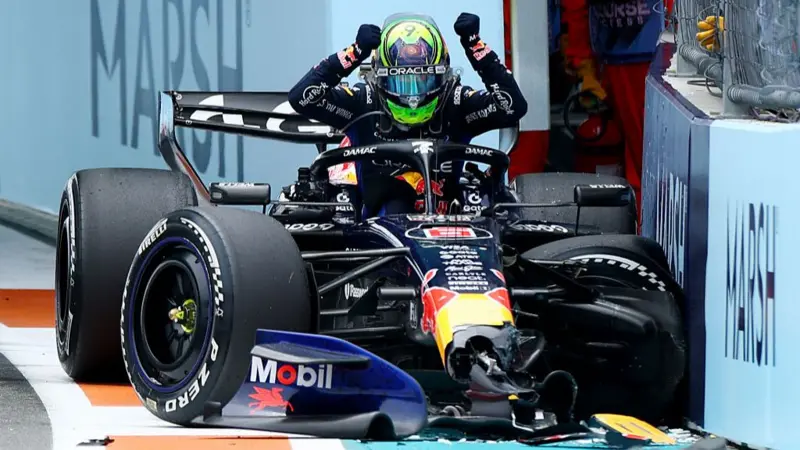
Perez's car falling apart might be worse than either of the engine failures.
I dread to think what Alonso's seat issues is code for, given various past seat issues for various drivers - I'm thinking of the time Hadjar's car tried to castrate him in particular.
While there was less racing after Russell retired, there was racing up until the end, which again supports the argument that the new regulations are working.